Monday, 17 September 2012

The Top Ten Calcium-Rich Foods...They Might Surprise You!


Happy Monday, everyone!

   As more research arises about the potential dangers of calcium supplementation (see: http://www.cbc.ca/news/health/story/2012/05/23/calcium-supplements-heart.html), I have been spending some time researching and compiling the best ways to obtain this important mineral naturally. Here is a short breakdown of the 10 most calcium-rich foods. Which ones are YOU eating?! (Notice: no yogurt or milk on this list!)

1.   Sesame Seeds - raw sesame seeds possess almost 1000mg of calcium per 100g serving.

2.   Chia Seeds - Chia seeds are very high in calcium (as well as the beneficial Omega 3 and 6 fatty acids). A 3.5 ounce serving of these little seeds can provide about 631mg of calcium. Try adding chia seeds to beaten eggs, soak for 10 minutes, then make an omelette! 

3.   Dark, Leafy Greens - Spinach ranks very high in calcium, with 56mg of calcium per cup. A 100mg serving of collard greens packs a whopping 145mg of calcium. One cup of steamed bok choy contains close to 158mg. Kale contains 139mg of calcium and the spicy mustard green has 103mg of calcium per 100mg serving.

4.   Flax Seeds - These are not only high in calcium (256mg per 100g serving), but are also rich in omega 3 fatty acids and lignin, which may help prevent cancer and hot flashes! Make sure to use ground or whole flax seeds, as the refined flaxseed oil loses its calcium levels due to processing. I like to use these as a hidden surprise in baked goods - add to your cookies and cakes for an extra calcium punch!

5.   Quinoa - One cup of cooked quinoa offers approximately 60-100mg of calcium, not to mention a high amount of potassium, zinc and protein. Quinoa contains every amino acid - the building blocks of protein! I love to add these little grains to my salads, or as a substitute for rice in chicken soup!

6.   Oranges - One cup of freshly-squeezed orange juice can bring and extra 72mg of calcium to your morning. Not to mention all of that vitamin C, which significantly improves the amount of calcium your body can absorb. 

7.   Beans - Many commonly-found beans are quite high in calcium. Winged beans contain 442mg of calcium per 100g serving! Many white beans are also high in calcium (approximately 175mg per serving on average). Navy beans are also a great source, with 127mg of the mineral per cup.

8.   Broccoli - My favorite! One cup offers up about 74mg of calcium, along with 120mg of vitamin C (just like oranges, this will help increase the amount of calcium that is absorbed by your body). Broccoli also contains significant amounts of vitamins K and A, folate and dietary fiber. All-in-all, a delicious super food!

9.   Dried Fruits and Nuts - Dried figs are very high in calcium. About 5 of them will give you 135mg of calcium! Almonds are also high in this mineral - raw, or ground into nut butter, they possess 266mg of calcium per 100g.

10.   Dried Herbs - Dried savory spice contains an incredible 2132mg of calcium per 100g serving! Thyme, rosemary and marjoram can be substituted with savory spice in many dishes. Other dried herbs that are calcium-rich include: dill, basil, marjoram, thyme, oregano, poppy seed, mint, celery seed, sage, parsley, and rosemary. Skip the salt and use these spices to add flavor to your dishes...and a calcium boost!


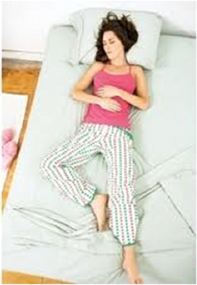


Wednesday, 22 August 2012

Perfect Posture...While You Sleep!


Does posture matter when you are lying down and sleeping? Let’s all hear a resounding YES! In fact, most patients make their way into a chiropractor’s office with back or neck pain after a bad night of sleeping: “I don’t know what happened; I just woke up with it!” If this sounds familiar to you, read on!

The most common sleeping positions are:

1.       On your back
2.       On your stomach
3.       On your side/fetal position

Let’s start with the worst of the three: Sleeping on your stomach.


Sure, if you are a snorer, this position may help with that, but as far as your back and your neck is concerned, this is not a good way to get your Z’s! Sleeping on your stomach forces your back into extension, which acts to jam your spinal joints and shorten your back muscles. It also puts unnecessary strain on your neck, as pillows tend to be quite a bit higher than the mattress. When lying on your stomach, you have no choice but to turn your head and neck to one side or the other in order to breathe. Try this now: Turn your head to one side and keep it there for 15 minutes…tough, eh? Now try it for 7 hours – this is what is happening to your body when you sleep on your stomach. No wonder your neck hurts when you wake up in the morning! As humans, we are creatures of habit and sometimes this position is a hard one to break. Also, while sleeping, we toss and turn – no one person stays still all night long!

TIP: If you are a stomach sleeper, break the habit by wedging a body pillow next to your body. When you instinctively try to roll over on to your stomach, the pillow will prevent you from rolling all the way over.

Next, let’s talk about the best sleeping posture: Sleeping on your back.


Sleeping on your back makes it easier for your neck and spine to maintain a neutral position throughout the night. You are not twisting or forcing any unnatural curves on your back and it is also the best position for balancing your body weight and keeping your internal organs aligned. This position is also great to control acid reflux, and can minimize the risk for wrinkles as your face is not rubbing against your pillow! All good reasons to sleep this way!

Now, let me make something clear – sleeping flat on your back is NOT a good position! This forces your spine to be “straight” and our spines are not meant to be straight! Our natural spinal curves must be supported for a proper sleeping posture while on your back.

TIP: Place a pillow under your knees to keep your back in proper alignment throughout the night. This will also prevent you from rolling over while you are asleep. Do not use a pillow that is too thick! You want to just fill the space between your neck curve and the mattress. Thicker pillows are better for side-sleepers – read on to find out why…

Lastly, and still a great sleeping position: Sleeping on your side.


This position is also a good one, but there are things to look out for! Sleeping on your side, do you ever notice how your knees turn down and tug on your hips? How about your shoulders? Ever wake up with shoulder pain, or tingling in the arms and fingers? Sleeping on your side improperly can cause these early morning symptoms!

TIP: Sleep with a pillow between your knees while on your side. This will prop up your top hip and keep your spine and lower extremities in a much more comfortable and anatomical position (see the image below). Also, use a thicker pillow! This is a common mistake – you want to fill the space between your head/neck and the mattress. If you are sleeping on a thin pillow, your neck will tilt down and can cause the nerves and blood vessels that go from your neck to your downside arm to become squished. This can lead to the “why is my arm still asleep!?” feeling when you wake up!


Until next time, sleep well and live happy! 


Wednesday, 8 August 2012

How can a 0 calorie drink can cause weight gain?!

   Hi again, everyone! It has been over a month since my last post – please accept my apologies, I recently got married and moved my practice! Needless to say, it was a crazy and wonderful July!

   Today I have posted a video that will hopefully have you thinking twice about the foods you consume, specifically diet sodas. In this video, you will be introduced to the Acid-Alkaline balance in your body and how the foods/drinks that you enjoy can shift this balance.


   To sum it up, diet sodas, a 0 calorie drink, can increase your weight due to their end effect on your metabolism. Being so high in acidity, diet soda will cause your blood to also become acidic. In response to this, your body has to regulate your acid-alkaline balance and does so by leaching precious minerals. Two important minerals to consider in this specific example are Calcium and Iodine.

   The leaching of calcium causes osteoporosis. If you have a family history of osteoporosis or osteopenia, or have the condition yourself, diet sodas will wreak havoc on your bone density!

   Iodine is a mineral found in your body that regulates your thyroid gland. Your thyroid gland acts to control your metabolism. If iodine is being taken away from the body to alter an acidic environment, your thyroid cannot function properly – thus, weight gain!


Wednesday, 13 June 2012

The Single Most Important Thing You Can Do For Your Stress


Hi again Readers!

Today I'd like to share with you yet another inspiring video from Dr. Mike Evans on the single most important thing you can do for your stress. We ALL have stresses, big and small - no matter the size of the stress, they can become overwhelming in this fast-paced world in which we live! Only YOU have the power to change your outlook on life!


Wednesday, 16 May 2012

Everyday Actions Could Be To Blame For Your Neck Pain!


It’s 4pm and, yet again, you’re headed to the medicine cabinet for your daily dose of Advil to cure your neck pain. Sound familiar? Do you ever wonder WHY this unrelenting, nagging pain won’t just go away already!?

I’ll tell you WHY! Unknowingly, your daily activities are causing those aches! Most neck pain is a result of repetitive daily tasks that put strain on the muscles and joints of your neck. Today I am going to touch on the 4 most common activities that you do EVERY DAY that trigger neck pain (and headaches!):

Computer Work:

Working at a desk where you are sitting all day in front of the computer is the NUMBER ONE thing we do that leads to neck pain. Why? Desk posture! Also known as “student or secretary syndrome”, the day-in, day-out strain that is put on your neck while lurched over your desk can really add up! The most common desk posture causes your upper back to slouch and round while your neck juts forward. This position lengthens your muscles and makes them weak. It also puts a great deal of pressure on your spinal disks, which can lead to disc bulging and pain (sometimes down the arms or the legs). Sitting with this posture every day leads to considerable muscular weakness and imbalance and this is known as “Upper Cross Syndrome” – one of the most common problems I encounter in my clinic!


If you do have to sit at a desk all day, take “microbreaks” every 15-20 minutes. Stand up and stretch, go for a short walk around your office, etc. Studies have shown that people who take these microbreaks are 21% less likely to suffer from neck and shoulder pain. For the proper ergonomic desk set-up, see the image below. You can also ask your chiropractor to come to your office for a workplace ergonomic evaluation. This will ensure that you (and your colleagues) are sitting in the optimal position for ongoing spinal health.  


Texting:

Discomfort and muscle pain from texting has become so common that it now has a name: “Text Neck”. Especially common in younger people and those in professional office settings, text neck is becoming a real problem and I am seeing it more and more in my clinic. Think about it: you are walking down the street and your phone “dings” that you have a new text message. Grab your phone and start typing. STOP and evaluate your posture. Your neck is probably hanging way down – so much so that your chin is nearing your chest. Excessive texting habits will not only lead to neck pain, but headaches, shoulder pain, arm and hand pain are very common symptoms as well. Dr. Dean Fishman of the Text-neck institute describes this problem as: “a repetitive stress injury to the body from using hand held mobile devices such as mobile phones, portable gaming units, MP3 players, e-readers and the like”. The biggest problem with this is that the younger text-hungry generations are showing up in chiropractic offices with postural irregularities, early spinal degeneration and curve reversal. 


Carrying a Purse or Computer Bag:

The oversized handbag and briefcase is really in style these days! What’s not in style? The back, neck and shoulder pain they can leave you with! Shop strategically for your handbags:
1.       Feel the weight of the bag first: You should not carry more than 10% of your body weight, so starting off with a heavy bag when empty is not a good start!
2.       Get a bag with a handle or with a cross-body strap (which happens to be very fashionable these days, lucky us!). The long strap shoulder bags pull you to one side and bump against your  hip, causing you to perform a balancing act that leads to hiking the shoulder up to keep it in place. If you must carry a bag with a long shoulder strap, switch sides often to avoid excessive asymmetrical stress.
3.    Carry only the essentials or take a smaller purse! The larger the bag, the more we can carry in it – although this sounds wonderful, your back may feel differently. If you are going out to the grocery store, take your wallet, keys, sunglasses – leave the water bottle, laptop, and any other accessories that you truly don’t need. The extras just add to the weight of the bag which increases the stress on your spine.


Monday, 23 April 2012

Fear of Spider....Veins!


Are you scared of spiders - the ones that start at the top of your leg and travel all the way down to the bottom? You know - those bluish spiders that can only be hidden by tights and pants?  Of course real spiders are easier to get rid of then the spiders - veins - that we are referencing. If you are continually on your feet read on.


What are varicose veins and WHY do we get them?

Varicose veins, also known as spider veins, are enlarged and often swollen veins that become large enough to be visible under the skin of your legs. Your heart contracts and this pressure of your heart muscles push fresh blood with oxygen through your arteries to all the cells of your body. The veins in your body carry blood from all of your cells towards your heart and allow for carbon dioxide and other waste products to be removed from your cells, but the veins do not have a pressure system, like your heart, to force the blood back up! Luckily for us, our bodies are pretty amazing and were designed to allow for a steady flow of blood through your veins through a number of complex mechanisms, one of which is a one-way valve system that only allows blood to move up towards your heart.


If your blood does not flow steadily through your veins, the blood can begin to pool and cause your veins to enlarge. When they enlarge, the valves become less effective – at this point, you’ve got varicose veins. You can develop them in a number of different places, but it is most common in your lower legs.

HOW can prevent these veins from developing?

The BEST way to prevent these veins from forming is to maintain a healthy cardiovascular system with regular exercise and a healthy diet. When your heart is strong, your blood vessels stay clean and flexible and allow for steady blood flow.

You also want to take care of your liver, as a large portion of your blood travels here first (your liver acts to remove the waste products returned in your veins before it reaches the heart). If your liver is stressed, it will degenerate and cause the blood to flow improperly through it, leading to the pooling of blood in the veins of your legs. Minimize your alcohol intake, as well as use of acetaminophen and prescription medication to help your liver maintain a healthy state.

Along with looking after your liver, you will also want to take care of your lungs! All of the blood that moves through your veins ultimately ends up in your lungs to pick-up more oxygen to re-deliver to your cells. If your lungs are diseased, the flow of blood becomes strained and can cause blood pooling in your veins, much in the same way as an ill liver can do.

Eating foods that are high in Vitamin C and flavonoids is essential to building and protecting strong blood vessels. Raw chocolate is very rich in flavanoids – the perfect excuse for chocolate!

If you are already noticing these little veins popping out under your skin, wearing compression stockings is the best first-line treatment for them. These stockings or socks are worn all day and act to steadily squeeze your legs, helping veins and your leg muscles to move the blood back up more efficiently. The prescription grade stockings can be found in most chiropractic offices and, at non-prescription pressures, in most pharmacies and drug stores.


Why should we try to prevent them?

If varicose veins are left to their own devices, they can become quite painful – worsening with walking or standing. They can also become so itchy that scratching can become uncontrollable and ulcers can develop. In very rare cases, the veins can form clots that can break off and travel to your lungs, leading to breathing and heart problems.

Sometimes, these veins are not very preventable – genetics play a strong role in determining whether you will get them. They also tend to show up in pregnancy due to the increased pressure of the growing womb on the inferior vena cave – one of the largest veins in your body. Don’t fret! Most of the veins that do appear during pregnancy will resorb.


Monday, 26 March 2012

Do you want to look 5 lbs thinner WITHOUT having to diet or exercise?


As seen at www.beautyconnexion.com


Who doesn’t! What’s the catch, you say? No catch this time – it’s all about posture. Maintaining proper posture can (and will) make you look thinner! It will also make your entire body feel better and is a major aspect of my patient treatment plans.


Let’s get the bad news out of the way first: poor posture can lead to excessive strain on our postural muscles and may even cause them to “give up” when held in certain positions for long periods of time (do you sit or stand ALL day!?). When this occurs, you are more prone to injury and back pain! There are a number of factors that can contribute to poor posture. These include: stress, obesity, pregnancy, weak postural muscles, abnormally tight muscles, foot pronation (your ankles roll inward – runners: this is very common for you!), and high-heeled shoes (remember my last article?). On top of all of this, if you have decreased flexibility, a poor work environment, improper posture while at work, and unhealthy sitting and standing habits, the chances are, you have bad posture.

Good posture is the correct alignment of body parts supported by the right amount of muscle tension against gravity. Without posture (and those muscles that control it), we would just fall to the ground! These postural muscles also work to maintain our balance during movement. It’s not just about looking thinner – improving your posture is associated with increased overall energy, better breathing patterns, improved blood flow and circulation, and improved health status!

Most people start the day with good posture, but, as the hours tick by, our muscles fatigue and we begin to slump and slouch. A simple scan at home can help you determine if your posture needs a make-over. When standing, your head, shoulders and hips should line up, one above the other. Start by looking at yourself from the side – you should be able to hang a string that lines up with the back edge of your ear, the tip of your shoulder, the hip trochanter (the body, hard bump that you can feel at the side of your hip), and just in front of your ankle bone. Now, look at yourself from the back (or have someone look for you!) – you should not notice any rotation or  tilt of  the head, your shoulders should be at the same level and not curled forward. Your hips should also be level and your feet should point outward slightly. See the following diagram for a better idea of what to look for:


I can hear you now: “Dr. G, can I correct my poor posture?”

YES – but remember, long-standing postural problems will take time to address as your joints and muscles have adapted to your preferences of the past! Conscious awareness of your body and muscular re-training will help you to correct your posture. This is a very common area of rehabilitation training that I provide with over 85% of my chiropractic patients - often, poor posture can be the culprit for MANY back and neck pain problems!

Your body is the only one you will ever get, so take care of it! Transformation is a present activity – begin correcting your postural imbalances today and reap the benefits of a healthier, more confident YOU!